
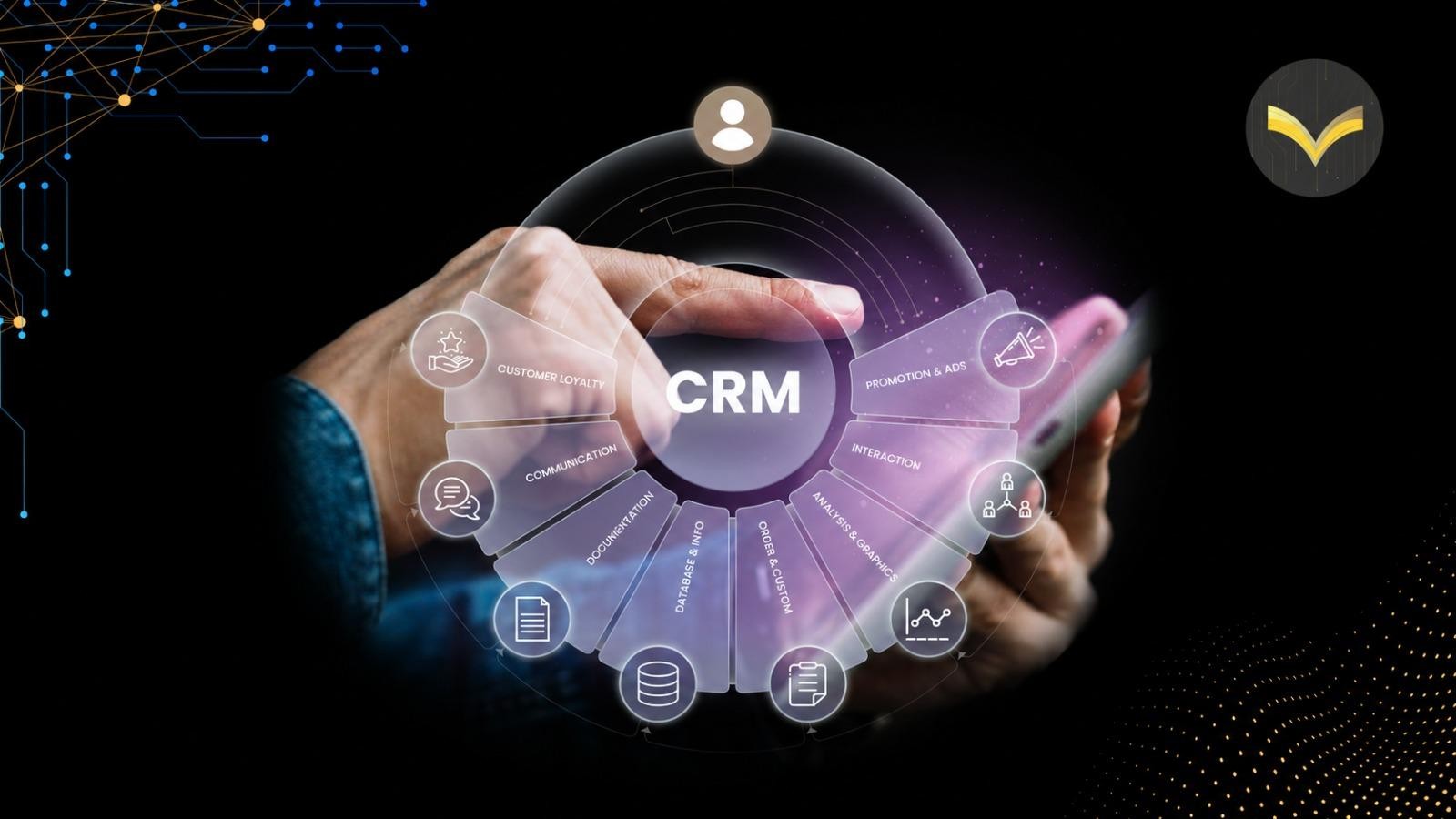
How CRM Automation Accelerates Business Success and Builds Stronger Customer Relationships
Each business expands until the point that managing interactions with customers becomes a challenge. Sales teams must struggle to manage leads, while support personnel are not able to track client requests, and the marketing efforts are not consistent. This is the moment when the automation of CRM changes the way companies run.
Instead of relying in spreadsheets or manual work, organizations are able to automate workflows and enhance customers' experiences and let staff to concentrate on their most important actions. Starting with lead nurturing to retaining customers. Automation helps to streamline the procedure that supports the development over time of an enterprise and increase profits.
What Is CRM Automation?
"CRM automation" is the name used for the purpose of describing the use of technology that automates routine tasks that are part of the management of customer relationships, such as email follow-up as well as lead tracking and contact management. It also includes the assignment of tasks, reminders, and even reports.
Instead of requiring employees to perform these tasks by hand, the CRM systems can handle the tasks for you automatically, using specified requirements or the triggers. In the final analysis, businesses can cut down on time, minimize errors created by employees, and provide regular communication with potential clients.
The most commonly used features in an automated CRM are the following:
- Lead assignment automatically
- Follow-up emails as well as email sequences
- Reminders for appointments
- Sales pipeline updates
- Customer onboarding workflows
- Notifications regarding jobs
- Report generation
- Customer segmentation
Why CRM Automation Is Becoming Essential
Customers' expectations are growing. Customers expect prompt responses to their demands along with personal interaction and seamless experiences across a variety of platforms. Companies that depend on manual processes usually fail to meet this expectation.
By implementing the automation of CRM, businesses are able to react faster and provide greater personal interaction without adding more tasks. Automation makes certain that each opportunity is taken advantage of while making sure that the teams are effective and efficient.
In addition, it helps businesses increase the size of their operation speedily. When managing hundreds or thousands of clients, the system can be able to continue carrying out routine tasks with efficiency and accuracy.
How CRM Automation Improves Lead Management
Lead management can be one of the best uses for technology within the field of CRM. Each inquiry can be an opportunity to earn earnings; however, delays in responding may result in opportunities being missed.
With the automation of CRM, each lead being received are instantly classified into categories, retrieved, and then assigned to the correct sales rep. Automated workflows can create greeting emails, issue follow-up emails, and alert staff members whenever the demand for action occurs.
This process reduces reaction time as well as increases chances of converting prospective clients into customers who pay. This also prevents leads from getting lost in gaps caused by errors made in the process.
What Benefits Does CRM Automation Offer Sales Teams?
Sales specialists spend considerable time on administrative tasks rather than focusing on sales. Entry of details, scheduling documents, and sending reminders eat up time.
Automating CRM takes away many of these lengthy chores by automatically recording conversations and also making changes to deal stages and sending out reminders. Sales representatives have the ability to focus on developing relationships and negotiating agreements.
Other benefits include:
- Increased visibility for pipelines
- Response time is faster to prospective customers
- Consistent follow-up schedules
- Elimination of errors made by hand
- Accurate forecasting improved
- Productivity rises
- Better collaboration across departments
These enhancements usually lead to higher conversion rates as well as higher sales growth.
How CRM Automation Enhances Customer Experience
Customers who are happy tend to become long-lasting advocates for companies. However, providing consistently excellent customer service isn't easy without the proper process.
CRM automation allows businesses to personalize their communication based on consumer behavior, including buying history, history of purchases and choices. Automation of birthday messages, reminders for renewals, updates about support as well as suggestions for products, make for a pleasant experience for customers.
Customers also receive quick answers as the support ticket and query will be automatically sent to the appropriate employees. A faster reaction builds trust and enhances relations over time.
The Reasons Marketing Teams Benefit from the CRM Automation
Modern marketing heavily depends on data and timing. Sending the proper message to the right individuals at the appropriate time increases the efficiency of your advertising campaign.
CRM software can be used to help automate email marketing in addition to lead scoring, audience segmentation and customer experience. Instead of being required to manage each email, professionals in marketing have the ability to create workflows that run constantly in operation.
For example, if you download the contents from a site, an automated system can:
- You can send a thank-you email
- Connect the person in a continuous nurture program
- Informing the sales team.
- Follow-up messages
- The lead score is by the amount of engagement
This coordination approach leads to better alignment between sales and marketing. sales.
How CRM Automation Reduces Operational Costs
The addition of additional staff for administrative duties may increase operational costs. However, automated processes can cut down on the need to make manual adjustments throughout a wide range of processes in business.
By automating workflows, businesses can reduce mistakes, improve efficiency, and eliminate duplication of effort. Employees can be more productive in solving issues to solve customer issues and spend more time doing routine work.
Additionally, automated reporting cuts down the amount of time required for creating Excel spreadsheets. Managers are capable of accessing the metrics that measure performance and can use them to make faster, data-based choices.
What Features Should You Look for in CRM Automation?
There are numerous CRM systems that don't provide the same capabilities. Businesses should evaluate the options based on their needs and expansion plans.
The primary features include:
- Automatization of workflow
- Leads are captured as well as the route
- Email marketing integration
- Contact Management
- Sales pipeline tracking
- Automating tasks
- Dashboards and Analytics
- Mobile accessibility
- Customer support ticket management
- Integrations by third party
The scalable option allows the CRM to continue to support company growth without having to call to replace the entire system.
How CRM Automation Supports Business Growth
Growth requires an efficient system. When customer numbers increase, manual processes create obstacles that hamper scaling.
Automation of CRM helps companies handle greater workloads without staffing costs. The automated onboarding process, sales procedure, and customer communication keep the high quality of customer services while permitting for the expansion of.
Furthermore, leaders have greater knowledge of their own performance through the automated evaluation. This information aids in making an informed decision-making process, which leads to long-term development.
Automated businesses can also locate high-value customers, anticipate future prospects, and use funds more effectively.
Why Small Businesses Should Adopt CRM Automation Early
Smaller businesses usually assume that automation is only needed for larger businesses. However, it is feasible to get advantages in the marketplace starting from the beginning.
A small team will be able to function in a similar fashion to the bigger company by automatizing routine jobs. This allows workers to concentrate on customer interactions, innovations, and revenue-generating activities.
In addition, the use of automating CRM prior to the explosive expansion of your company can prevent chaos from the operation and aid in establishing standard operating procedures, which can be scalable over time.
How to Successfully Implement CRM Automation
The process of implementing HTML0 is a success. It begins with understanding the workflow currently in use and then identifying the tasks that are repetitive. consume valuable time.
Use these steps to get applications in real life:
- Map existing customer processes.
- Define automation goals.
- Select the appropriate software for your CRM.
- Clean existing customer data.
- Create workflows using attention.
- Make sure that employees are properly trained.
- Be sure to test automatization rules prior to launch.
- Verify performance on a periodic basis.
- Continue to improve on the basis of the data.
As they move towards implementation strategically, businesses can increase the returns on investment while also minimizing disruption.
Common Challenges and How to Overcome Them
Despite its numerous benefits but, it needs cautious preparation. Lack of high-quality data, unclear procedures, and poor employee training may make it less efficient.
The good news is that these problems can be resolved. Companies should prioritize using clean data and involve all parties in the process, and offer education to customers.
Regular audits allow you to discover areas where there is inefficiency and areas where it is possible to improve to ensure that the system is in a position to provide real positive results.
Closing Remarks
Companies that implement the idea of automation in CRM can benefit from increased growth and speed, better efficiency, and improved relationships with their customers. Through automation of routine tasks, businesses let employees concentrate on the strategic direction and keep continuous communication with customers throughout their journey.
In the case of improving lead management, increasing sales effectiveness, enhancing advertising programs, or providing excellent user experiences, CRM automation can provide tangible advantages that can ensure the long-term success of your business. Businesses that are investing now with this type of technology are more likely to compete as they adapt, evolve, and succeed in a market focused on the needs of customers.
Frequently Asked Questions (FAQs)
1. What is CRM Automation?
CRM automation makes use of software to automate regular customer relationship management tasks such as monitoring leads, sending follow-up emails, and task allocation as well as reports.
2. What is the purpose of CRM automation? to companies?
Improves effectiveness, decreases labor-intensive manual tasks, boosts customers' experience, and assists businesses in expanding their operations as well as increasing productivity.
3. Can small-scale businesses profit by CRM automation?
Absolutely. Small businesses can streamline their operations, cut the amount of time needed, enhance customer service, and become more efficient by automating routine tasks.
4. What is the most efficient way to use CRM automation to enhance sales?
It allows for automated lead assignment and follow-up and also reminds with update and pipeline notifications. This allows sales personnel to focus on closing deals and not taking care of tasks.
5. Does CRM automation replace employees?
There is no HTML 0. It assists workers by handling routine chores to allow them to concentrate on building relationships, implementing strategies, and finding solutions to issues.