Top Benefits of AI in Digital Marketing for Small Businesses
Small businesses often face a common challenge. They need to compete with larger brands while working with limited budgets, smaller teams, and less time. For years, this created a significant gap between what large companies could achieve and what small businesses could realistically accomplish.
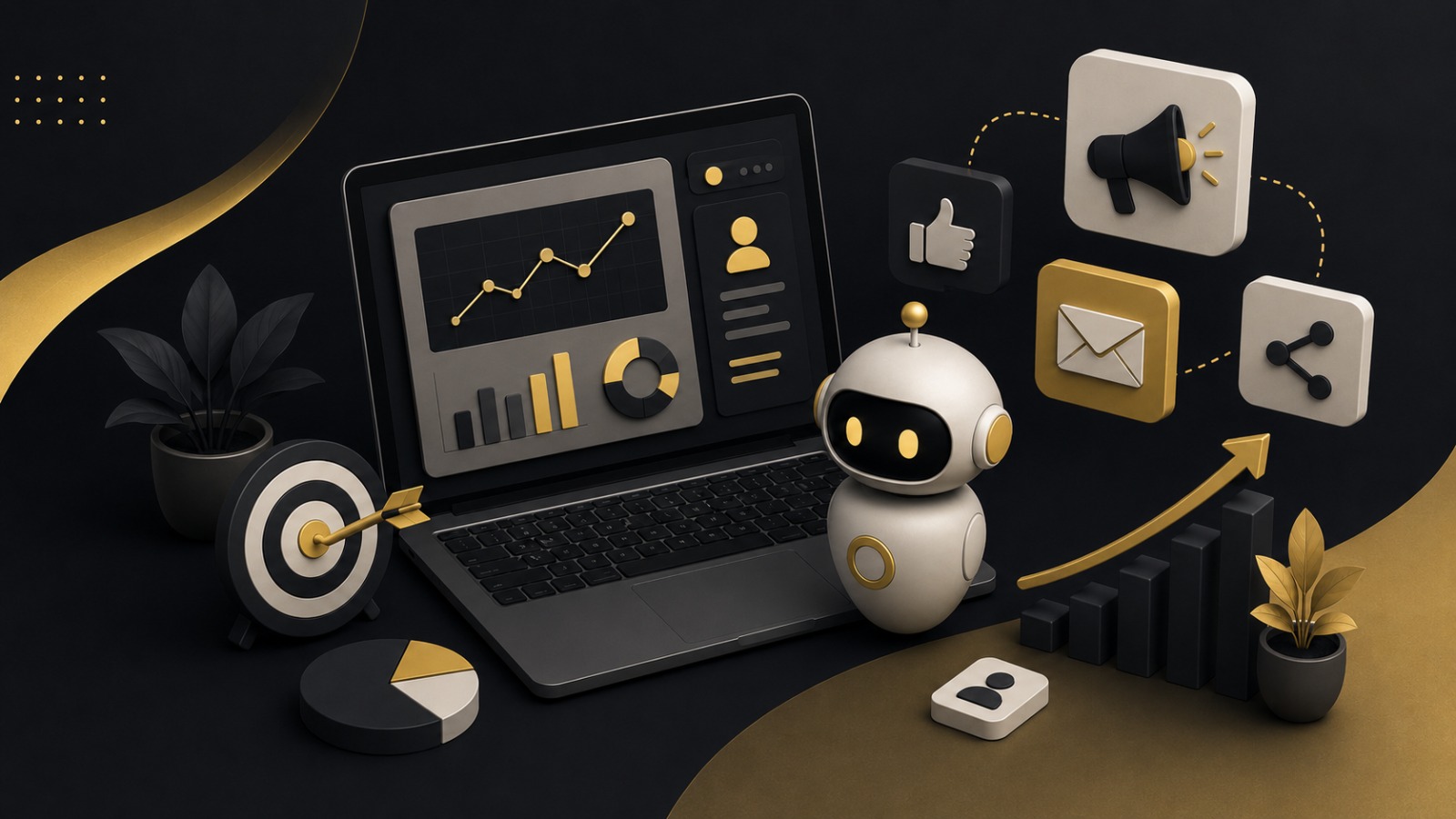
That gap is quickly shrinking. Thanks to advances in artificial intelligence, small businesses now have access to powerful marketing tools that were once available only to large enterprises. From content creation and customer support to advertising and analytics, AI is helping businesses work smarter, faster, and more efficiently.
The growing adoption of AI in Digital Marketing is changing the way businesses attract customers, build relationships, and increase revenue. Instead of spending hours on repetitive tasks, business owners can focus on strategy, creativity, and growth.
What Is AI in Digital Marketing?
Artificial intelligence refers to technology that can analyze data, recognize patterns, learn from behavior, and perform tasks that traditionally required human intelligence. When applied to marketing, AI helps businesses automate processes, improve decision-making, and personalize customer experiences.
AI in Digital Marketing can assist with content creation, email marketing, customer service, advertising optimization, audience segmentation, predictive analytics, and much more. Rather than replacing marketers, AI acts as a powerful assistant that enhances productivity and performance.
As a result, even small businesses with limited resources can execute sophisticated marketing campaigns that deliver measurable results.
Why Small Businesses Should Pay Attention to AI
Many small business owners assume that AI is expensive or too complex to implement. However, modern AI-powered tools are becoming increasingly affordable and user-friendly.
Furthermore, consumers now expect faster responses, personalized experiences, and relevant recommendations. Businesses that fail to meet these expectations risk losing customers to competitors who embrace technology.
By using AI in Digital Marketing, small businesses can streamline operations, reduce costs, and improve customer engagement without hiring large teams or investing heavily in infrastructure.
Most importantly, AI levels the playing field and allows smaller brands to compete more effectively in crowded markets.
How AI Helps Save Time and Increase Productivity
Time is one of the most valuable resources for any business owner. Managing marketing campaigns manually often requires significant effort and attention.
AI helps automate repetitive tasks such as scheduling social media posts, responding to common customer inquiries, generating content ideas, and analyzing campaign performance. Consequently, teams can spend more time focusing on strategic activities.
For example, AI-powered marketing tools can create email subject lines, recommend posting schedules, and generate audience insights within seconds.
This increased efficiency enables small businesses to accomplish more with fewer resources while maintaining consistent marketing efforts.
Benefit #1: Smarter Content Creation
Creating high-quality content consistently can be challenging, especially for small teams. AI tools simplify this process by generating topic ideas, outlines, headlines, and even draft content.
Additionally, AI can analyze search trends and customer interests to identify topics that are more likely to attract engagement. This allows businesses to create content that resonates with their audience.
Although human creativity remains essential, AI significantly reduces the time required for research and drafting.
As a result, businesses can publish blogs, social media posts, emails, and website content more frequently and effectively.
Benefit #2: Better Customer Personalization
Modern consumers prefer personalized experiences. They want brands to understand their preferences and provide relevant recommendations.
AI can analyze customer behavior, purchase history, browsing patterns, and engagement data to create tailored experiences. Consequently, businesses can deliver more relevant content and offers.
For instance, AI-powered email marketing platforms can send customized messages based on customer actions and interests.
This level of personalization often leads to higher engagement rates, stronger customer relationships, and increased sales.
Benefit #3: Improved Advertising Performance
Running paid advertising campaigns can be costly if not managed properly. Fortunately, AI helps optimize advertising efforts by analyzing large amounts of data in real time.
AI can identify high-performing audiences, adjust bids automatically, and recommend budget allocation strategies. Therefore, businesses can maximize return on investment while reducing wasted spending.
Moreover, AI tools continuously learn from campaign performance and make adjustments to improve results over time.
This makes AI in Digital Marketing especially valuable for small businesses that need every advertising dollar to count.
Benefit #4: Enhanced Customer Support
Customer service plays a critical role in business growth. However, responding to inquiries around the clock can be difficult for small teams.
AI-powered chatbots provide instant responses to common questions, helping customers get the information they need without waiting.
Furthermore, chatbots can handle appointment bookings, product recommendations, order tracking, and lead qualification.
By automating routine interactions, businesses can improve customer satisfaction while allowing human team members to focus on more complex issues.
Benefit #5: Data-Driven Decision Making
Marketing success depends on understanding what works and what does not. Unfortunately, analyzing large datasets manually can be overwhelming.
AI simplifies data analysis by identifying trends, patterns, and opportunities that may otherwise go unnoticed.
For example, AI can reveal which marketing channels generate the highest conversions, which customer segments are most profitable, and which campaigns require optimization.
Therefore, businesses can make informed decisions based on real data rather than assumptions.
Benefit #6: Stronger Email Marketing Campaigns
Email marketing remains one of the most effective digital marketing channels. However, achieving high open and conversion rates requires careful planning.
AI helps optimize email campaigns by analyzing customer behavior and predicting the best times to send messages.
Additionally, AI can personalize subject lines, content, and product recommendations for individual recipients.
As a result, businesses can improve engagement, increase conversions, and strengthen customer loyalty through more effective communication.
How AI Improves SEO and Online Visibility
Search engine optimization remains essential for attracting organic traffic. However, SEO involves keyword research, content planning, competitor analysis, and performance monitoring.
AI simplifies many of these tasks by identifying keyword opportunities, content gaps, and optimization recommendations.
Furthermore, AI-powered SEO tools can analyze search intent and help businesses create content that better matches user needs.
When combined with human expertise, AI in Digital Marketing can significantly improve search rankings and online visibility.
AI vs Traditional Digital Marketing
| Feature | Traditional Marketing Approach | AI-Powered Marketing Approach |
|---|---|---|
| Data Analysis | Manual and time-consuming | Automated and fast |
| Customer Personalization | Limited segmentation | Advanced personalization |
| Content Creation | Fully manual | AI-assisted creation |
| Customer Support | Human-only support | Human + AI chatbot support |
| Ad Optimization | Manual adjustments | Real-time optimization |
| Email Marketing | Generic campaigns | Personalized campaigns |
| Decision Making | Based on assumptions | Based on predictive insights |
| Scalability | Resource-intensive | Highly scalable |
How Small Businesses Can Start Using AI
Getting started with AI does not require a large budget or technical expertise. Small businesses can begin with simple tools that address specific needs.
First, identify repetitive marketing tasks that consume significant time. Next, explore AI solutions designed to automate those activities.
Businesses can start with AI-powered content tools, email marketing platforms, chatbot solutions, or analytics software. After seeing positive results, they can gradually expand AI usage across additional marketing functions.
The key is to start small, measure results, and scale strategically.
Common Misconceptions About AI in Digital Marketing
Many people believe AI will replace marketers entirely. In reality, AI works best when combined with human creativity, strategy, and emotional intelligence.
Another misconception is that AI is only suitable for large corporations. However, many affordable AI tools are specifically designed for small and medium-sized businesses.
Some business owners also worry about complexity. Fortunately, modern AI platforms prioritize user-friendly interfaces and require minimal technical knowledge.
Understanding these misconceptions helps businesses approach AI with confidence and realistic expectations.
The Future of AI for Small Business Marketing
AI technology continues to evolve rapidly. As tools become more advanced, businesses will gain access to even greater automation, personalization, and predictive capabilities.
Future developments may include more accurate customer insights, smarter content generation, enhanced voice search optimization, and increasingly sophisticated marketing automation.
Businesses that adopt AI early will be better positioned to adapt to changing consumer expectations and market conditions.
Ultimately, AI in Digital Marketing is no longer a luxury. It is becoming a practical necessity for businesses that want to remain competitive and grow efficiently.
Final Thoughts
Small businesses no longer need massive budgets to execute effective marketing strategies. Artificial intelligence provides access to tools and capabilities that help businesses save time, reduce costs, improve customer experiences, and increase marketing performance.
Whether it is content creation, advertising optimization, customer support, SEO, or email marketing, AI offers valuable opportunities for growth. While human creativity remains essential, AI serves as a powerful partner that enables businesses to achieve more with fewer resources.
As technology continues to advance, the businesses that embrace AI in Digital Marketing will be better equipped to attract customers, strengthen relationships, and achieve long-term success.
Frequently Asked Questions (FAQs)
1. What is AI in Digital Marketing?
AI in Digital Marketing refers to the use of artificial intelligence technologies to automate, optimize, and improve marketing activities such as content creation, advertising, SEO, and customer engagement.
2. Is AI expensive for small businesses?
Not necessarily. Many AI-powered marketing tools offer affordable plans designed specifically for small businesses and startups.
3. Can AI replace marketers?
No. AI enhances marketing efforts by automating repetitive tasks and providing insights. Human creativity, strategy, and relationship building remain essential.
4. How does AI improve SEO?
AI helps with keyword research, content optimization, competitor analysis, and technical SEO improvements, making SEO efforts more effective.
5. What are the biggest benefits of AI for small businesses?
The biggest benefits include automation, personalization, improved customer support, better decision making, increased ROI, and scalability.
6. Which marketing activities can be automated using AI?
Businesses can automate email marketing, social media scheduling, customer support, lead nurturing, reporting, and advertising optimization.
7. Is AI useful for local businesses?
Yes. AI can help local businesses improve customer targeting, optimize local SEO, manage reviews, and enhance customer communication.
8. What is the future of AI in marketing?
The future includes more advanced personalization, predictive analytics, automated customer journeys, and smarter marketing optimization.