
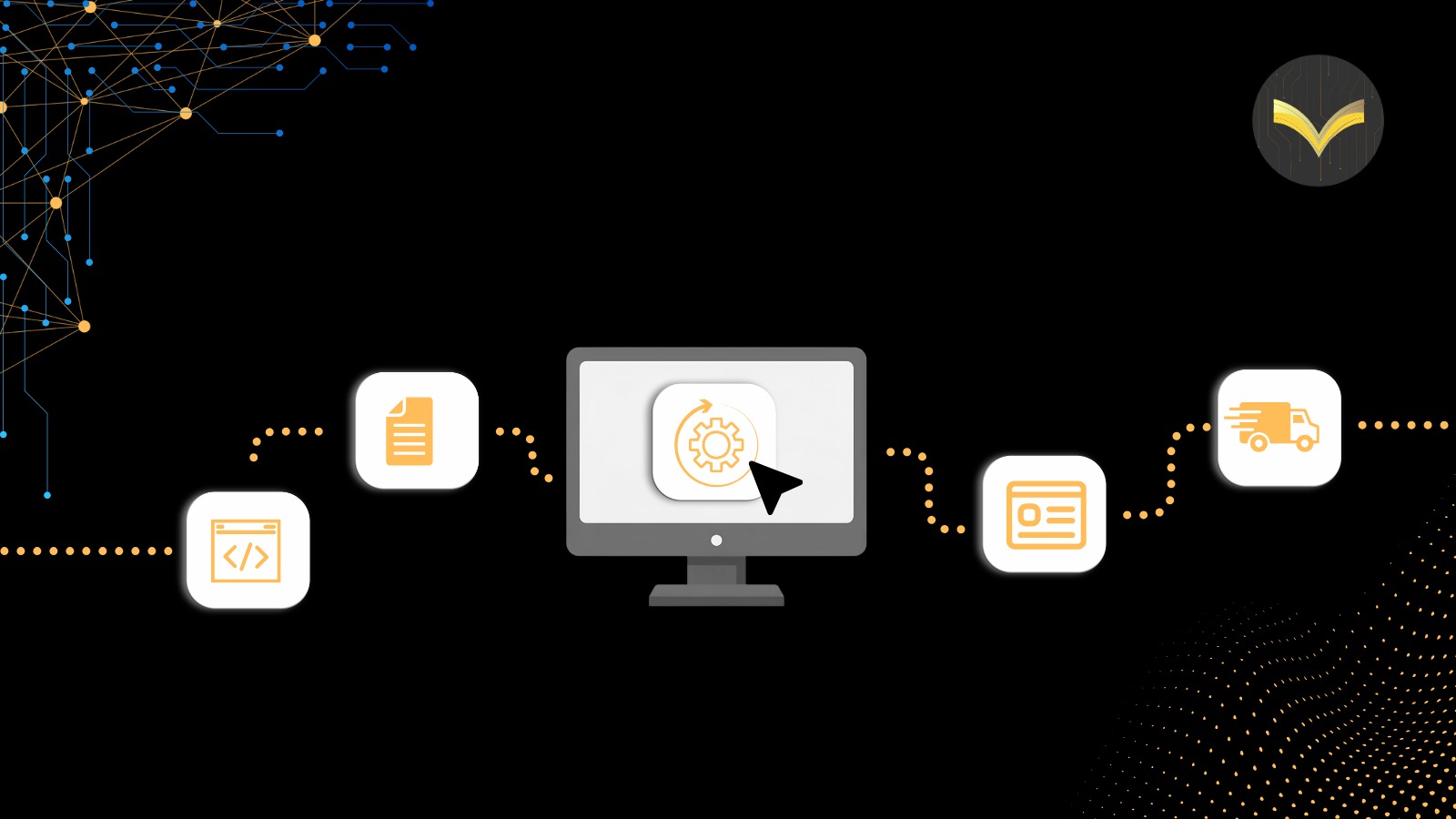
Why Modern Businesses Cannot Ignore Business Automation
Speed, accuracy, and efficiency are the defining metrics of success for modern businesses. Manual processes make it harder for businesses to meet customer expectations and deal with the competition. The larger the business, the more time and resources are lost to repetitive manual work.
This has made business automation a critical focus for all businesses. Automating repetitive manual work enables businesses to improve the workflow of their operations, minimize work errors, and allow their employees to work on more important and more rewarding tasks.
Benefits:
- Improves operational efficiency
- Reduces repetitive manual work
- Enhances customer satisfaction
- Lowers long-term operational costs
- Supports business scalability
- Facilitates better decisions with data analytics
Business Automation: What Is It?
"Business automation" refers to the systems and software that make it possible to run and manage periodic business operations without the need for people to be physically present. This is accomplished by creating automated work systems that regularly and accurately perform the business tasks.
Common examples are:
- Automatic generation of business invoices
- Automated employee onboarding
- Automated email marketing
- Automated customer support ticketing
- Automated inventory updates
- Automated appointment reminders
- Automated payroll
Consistency within and between the systems of a business is one of the most important benefits of business automation.
Why Modern Businesses Automate
Costs and time are two business resources that the modern marketplace forces businesses to optimize. Only by making their operations and processes faster and more consistent can businesses meet modern expectations for speed and efficiency.
The most common reasons businesses choose to automate are to:
- Increase productivity
- Improve operational consistency
- Reduce administrative burdens
- Respond faster to customers
- Minimize costly human errors
- Stay competitive
Business automation makes it possible for businesses to be more innovative and flexible.
How Does Business Automation Increase Productivity?
Time wasted on repetitive administrative tasks takes a toll on employee productivity. Automation alleviates that bottleneck. Instead, employees can focus on tasks that provide higher value.
The positive productivity impact includes:
- Faster task completion
- Less paperwork
- Approvals are handled automatically
- Interdepartmental collaboration improves
- Innovation increases
- Employee satisfaction improves
All of the above helps companies do more with their existing workforce.
Which Business Processes are Ideal for Automation?
There is a vast array of business tasks for which automation is ideal.
Human Resources
- Create job postings
- Conduct interviews
- Employee onboarding
- Manage attendance
- Approve employee time away
- Process payroll
Finance
- Create invoices
- Approve expenses
- Send payment reminders
- Create financial reports
Marketing
- Schedule email campaigns
- Nurture leads
- Schedule posts to social media
- Segment customers
Sales
- Update CRM systems
- Assign leads
- Send follow-up emails
- Create proposals
- Automate Customer Service
- Chat support
- Assign tickets
- Respond to FAQs
- Send notifications to customers
What are the benefits of business automation and reduced human error?
Manual processes always create opportunities for errors. Since automation executes tasks the same way each time, processes are done consistently and errors are greatly reduced.
Business automation helps processes by:
- Verifying data
- Removing entries duplicates
- Creating uniform processes
- Monitoring required signatures/approvals
- Keeping audit logs
- Calculating automated sums
Errors in business processes are greatly reduced and consistency improves.
How Does Business Automation Reduce Costs?
Automation does require an initial investment, but the savings provide an excellent ROI.
The savings primarily stem from the following:
- Fewer employee hours are needed to perform tedious, repetitive work
- Reduced mistakes that can be very costly
- Less paper is used
- Tasks are completed more quickly
- Resources are used more efficiently
- Business operations are more effective and efficient
These savings allow businesses even more opportunity to reinvest in innovation and help the business grow.
How Does Automation Affect Customer Experience?
The modern customer seeks fast service and a tailored experience. Automation affords companies the ability to deliver on the customer expectation of speed and personalization.
Examples of customer-facing automation include the following:
- Instant order confirmations
- Shipping notifications
- Appointment reminders
- Follow up emails
- Chatbots
- Recommendations
The loyalty and trust of customers is positively impacted by automation.
How Does Automation Affect Employees?
The main design purpose of automation is to assist employees and not eliminate their jobs. Repetitive tasks are removed, and the employee is left with the more complex tasks.
Employees may now get the opportunity to
- Solve difficult problems
- Connect with customers better
- Learn a new skill
- Plan more
- Work with other teams
- Job satisfaction is boosted by automation.
How Does Automation Affect Business Decisions?
For business decisions to be of quality, they must be made on the basis of quality information. Automated systems make data collection and organization continuous, and therefore reporting is quick and dependable.
Some of the decision-making improvements are:
- Dashboards that display information in real-time
- Reporting that is done on a regular basis
- Predictions that are more accurate
- Performance analysis that is done in a timely manner
- KPIs that are tracked and monitored
Automation gives organizations the ability to adapt to the market with confidence.
What Makes Business Automation Possible?
The ability to automate business processes is the result of the combination of multiple technologies.
Some of the technologies include:
- Software that aids in the automation of workflows
- Robotic Process Automation (RPA)
- Artificial Intelligence (AI)
- Machine Learning
- The Cloud
- APIs
- CRM systems
Business ecosystems that are both scalable and efficient can be made by the combination of the above technologies.
How Can Small Businesses Use Automation?
Automation does not have to be the domain of large corporations. Small businesses can implement automation to make their processes more efficient and gain a competitive edge.
Examples of business functions that can be automated:
- Appointment scheduling
- Email marketing
- Online invoicing
- Customer follow-ups
- Inventory management
- Payment reminders
Instead of lowering costs, the automation of these functions can result in large productivity increases for small companies.
Security and Compliance Improvements With Automation
Automating compliance requirements aids companies that struggle to stay compliant, particularly in a strict regulatory environment. Automation, in combination with established policies, helps companies with compliance.
Automation and Security Improvements
- Role-based access controls
- Recordkeeping
- Audit trails
- Approvals
- Data
- Policy enforcement
Automation of these security controls helps reduce risk and improve governance.
The Business Automation Process
Complete automation of business functions and processes can be approached strategically.
Automation best practices:
- Identify controllable/repetitive tasks
- Map processes
- Define process goals
- Prioritize process impact
- Prepare the workforce
- Keep tabs on the process
- Make continual improvements
Rolling automation best practices is most effective for a business.
Closing Remarks
Routine process automation used to be an optional business process. Now it is an imperative business process. Automation improves process efficiency, reduces costs, improves customer experience, and enhances business decision-making.
Automation results in:
- Greater productivity
- Lower costs
- Data improves
- Customer service improves
- Employee satisfaction improves
- Business process scalability
- Regulatory compliance improves
- Competitive advantage improves
Businesses that adopt automation early will improve their chances of sustained success in the digital economy.
FAQs
1. What is business automation?
The use of technology to complete business processes/tasks that occur frequently.
2. Why is business automation important?
Automation of business processes improves speed, reduces costs, and minimizes errors that improve customer experience.
3. What departments are there for automation?
There are departments like HR, Finance, Sales, Marketing, Operations, Logistics, and Customer Service.
4. Is Business Automation a Financial Burden for Small Businesses?
No, business automation is a tech solution that's cloud-based, affordable, and adaptable for small businesses.
5. Is Business Automation a Job Killer?
No, business automation is a technology that works alongside employees. It eliminates redundant tasks.