
10 Latest Website Design Trends for Better User Experience in 2026
Websites are no longer just page collections. They are often the first place potential customers engage with businesses, brands, or services. Users expect websites to be fast, simple, and easy to use. They should also be visually appealing and help users achieve their goals with little to no effort. As users continue to refine their web experience, businesses must also refine their experience by implementing modern, trendy, and functional website designs.
From online stores to SaaS platforms, portfolios, and corporate websites, every website design directly impacts the experience, trust, and conversions of the website's end users. The latest and greatest design innovations focus on building intuitive, meaningful web experiences, rather than distractions with flashy designs. This article outlines and explains ten modern website design trends that help improve user experience, website design, and website competitiveness.
What Are Website Design Trends and Why Do They Matter?
Website design trends are the most recent techniques and practices of design that evolve with the expectations of users, the capabilities of technology, and the changing goals of businesses. They influence how websites go beyond collections of pages and how they engage and communicate with users. Although trends are constantly changing, the more useful ones often solve the greatest design issues.
Incorporating relevant trends in website design may improve page visitors' overall experience, or UX. It may even strengthen brand identity and decrease bounce rates. An improved website may also yield an improved search performance and an increased conversion rate for businesses. This improvement focuses on tasks users need to accomplish.
Why User Experience Is the Foundation of Modern Web Design
User experience is more than pleasing colors and nice fonts. It is the totality of all the interactions of the visitors of a website with the website, such as the website's load time and ease of navigation. It is also the website's accessibility, responsiveness, and the way the content is displayed. A good experience fosters trust and an increased likelihood of visits to the website.
Also, search engines are beginning to reward websites that have seamless experiences for all users, across all devices. Because of this, the latest user-centered website design trends are more than a facelift for the website. They are a critical element of a business's strategy for an improvement to their economy and long-term success.
How Minimalist Interfaces Create Maximum Impact
Web design continues to embrace the minimalism trend. This is because a minimalist design creates a website with an experience that focuses attention on the key information, and the design is also clean, organized, and modern.
Additionally, a minimalist design is an uncluttered website. This clean design is an organized experience that modernizes and professionalizes the design. Minimalism helps combine clean design with a balance of strategically placed typography. A limited color palette can also be used to design and improve the navigation experience while balancing and enhancing overall usability of the website.
Trend 1: AI-Powered Personalization
Websites are undergoing a transformation thanks to AI. Where once websites had a one-size-fits-all approach to visitors, AI enables websites to assess visitors, analyze their behaviors, and use this data to provide recommendations and website features that are personal to them.
An e-commerce site, for example, has the ability to filter products based on how a site user has previously browsed. In this example and others the generalized and static website content is supplanted by personally relevant information for the user.
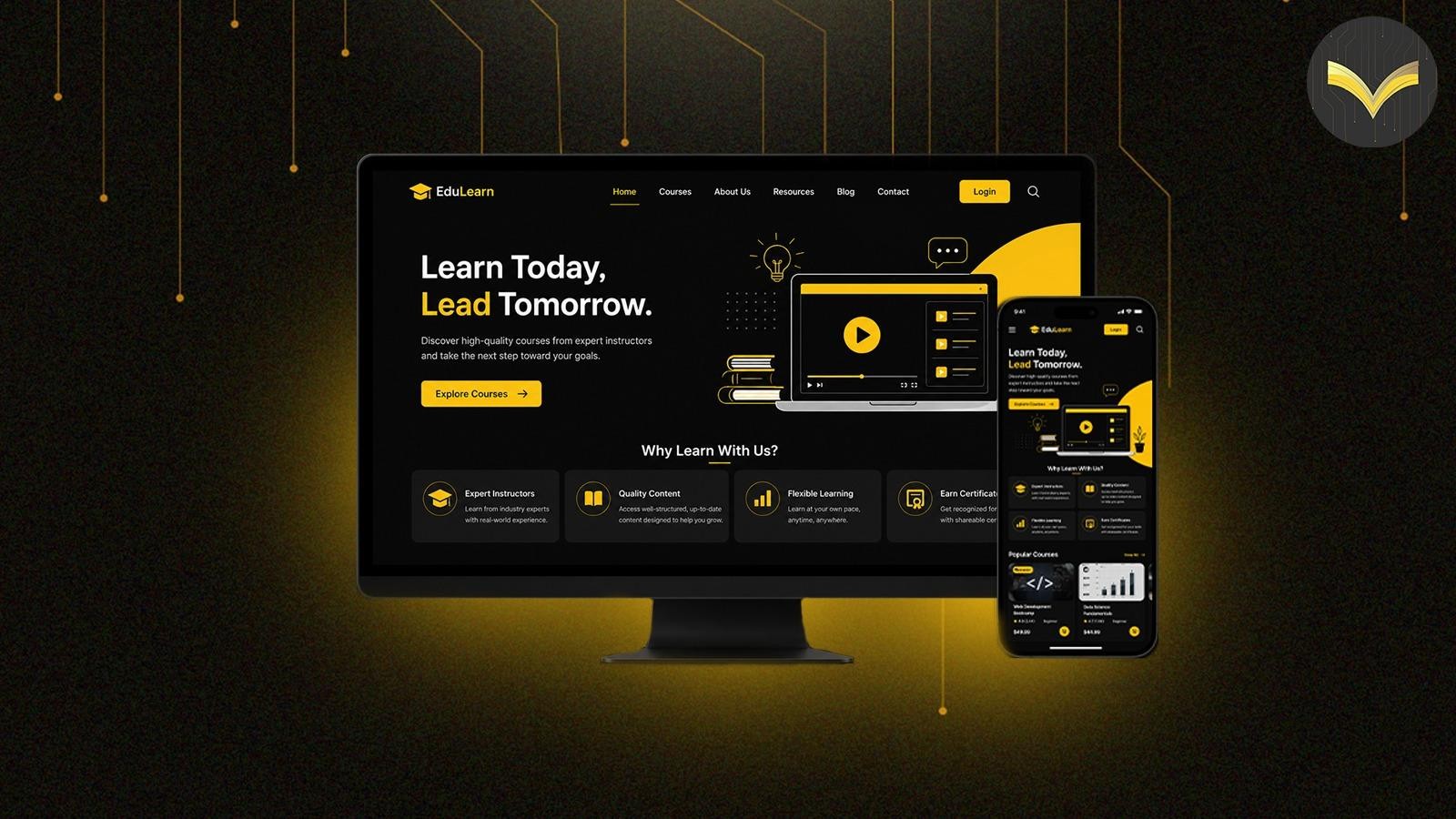
Trend 2: Dark Mode and Adaptive Themes
The evolution of websites and apps that employ dark mode reflects the growing use of nighttime browsing. Dark mode has helped websites and apps that employ it to reduce visual strain on dark browsing, and I appreciate that they are pleasing to the eye.
More and more websites are adopting the ability to employ either light or dark modes manually or automatically according to the user's preference. Dark mode is one of the most favorable and useful of the website design trends monitored.
What Makes Microinteractions So Powerful?
Microinteractions have a significant impact on the user experience. They allow a site to respond to user actions like form submission or product selection through an interface that is visually and functionally responsive.
Microinteractions impact the overall feel of an interface and encourage users to interact and engage with a site or application.
Trend 3: Immersive Micro Animations
To avoid the use of large animations that slow down performance, designers are implementing animations that rely on lightweight transitions to guide users. Button effects, loading animations, and hovers, among other types of animations, help users navigate.
Micro animations support visual hierarchy. They assist users in comprehending the changes that occur on a webpage and allow users to feel confident in completing a web interaction.
Trend 4: Typography as a Visual Anchor
Typography, as a design element, has transcended the boundaries of text on a webpage. The expressive nature of a font or a large headline helps synthesize and surface the overall brand identity and, in many cases, even support a layout's contrast.
A layout that has large text combined with a minimalist design eliminates the over-reliance on graphics and ensures a design that is easy to engage with, memorable, and even legible across all devices.
Trend 5: Mobile-First Responsive Design
Mobile-first design philosophies have reshaped how a responsive design is perceived on the web. Responsive websites are those that adapt to the various devices on which they are viewed while maintaining functionality.
Websites incorporating new web design trends help maintain consistent contact across all device types and help reduce bounce rates.
Trend 6: Design Interfaces with Accessibility in Mind
Accessibility for all is a focus for many web-building initiatives and is crucial for sites that have patrons with disabilities. Just as many web initiatives now include banner alerts for Covid-19, sites should also make users aware of their accessibility limitations.
There are many different tools and strategies that can help to build an accessible site for patrons with disabilities. Surprisingly, incorporating some of them could actually enhance the overall usability of the site for all patrons.
What Good Design Entails: Performance Optimization
Over the years, the general public has developed a universal appreciation for the aesthetics associated with high-quality web builds. However, if a web build does not perform well, all patrons, regardless of the design, leave the site before interacting with the content.
There are many digital builds that help enhance the web experience for patrons. Good web builds prioritize engagement. High web builds optimize the experience for patrons.
Trend 7: Performance Remains the Priority
After many years of a performance-first focus, web builds and design elements have prioritized the aesthetics of the build without compromising performance. This has helped build trust with patrons as the consistency of high-performing web builds across devices and varied network conditions has improved.
Trend 8: Scroll-Based Storytelling
Somewhat new to the scene, linear scrolling allows a page to narrate a story as the user scrolls. Animations, text, and images appear one by one like a flip book. This new strain of storytelling keeps the consumer engaged rather than focusing on the standard linear presentation of information.
More and more brands are beginning to adopt scroll-based transitions to describe their products, outline their services, and even describe their core values as a company. If done correctly, these animations can increase the user experience as well as the content presented.
How Visual Hierarchy Improves Decision Making
Visual hierarchy refers to the organization of information by the clear distinction of importance. Different but intentional use of spacing, typography, and contrast all help bring order to the design.
A good visual hierarchy helps lower the cognitive load to the consumer as information is presented in a clear structure. The consumer is even less likely to get lost in the hierarchy, helping them focus on the task at hand.
Trend 9: Strategic White Space and Structured Layouts
A common misperception of white space is that it is empty and void of information. In fact, it is an intentional design choice that helps structure the information in a digestible manner.
Website Design Trends of the present and near future will favor a premium experience by placing more whitespace and ease of structured design grids. Again, whitespace will help focus the consumer on the information that is most important.
Trend 10: Interactive 3D and Immersive Visuals
3D graphics that were once heavy and resource draining are now light and far more accessible. Many companies have animated 3D graphics to illustrate products with deep engagement in a new marketing format.
To prioritize performance, successful designs have less visual richness. Besides the importance of graphics, customer experience is always the most important design choice.
How to Successfully Integrate Changing Website Design Trends Into Your Business
Trends should not be incorporated into website designs just for the sake of it. To create designs that are truly in line with business goals, audiences, and the capabilities of the technology they offer, businesses must understand all of these aspects.
Analyzing the data that comes from user testing and continuously optimizing sites also helps to create functionality that users will actually engage with. Optimization is often more effective in the short term than a full redesign. Taking small steps helps to balance user experience with functionality.
Consistency across business branding, website navigation, and accessibility is vital. It should be considered in new website features. It is important to be strategic about which trends are included in website design. The best business practices will be honored while remaining professional.
What Must Be Considered Before a Website Redesign?
Friction points and user interactions must be evaluated. Objectives must also be set for a redesign. Understanding the cause of a lack of conversions is pivotal in providing a redesign with purpose.
An evaluation should also consider mobile functionality, accessibility, loading speed, and website navigation. The order that these elements are addressed is more important than aesthetics.
How Website Design Trends are Shaping the Future
Prioritizing people will always be at the heart of successful design. While technology will continue to evolve, simplification of digital enhancements will be key.
Thoughtful website design trends that are used to strategically innovate will be a competitive advantage for businesses. These will optimize usability, trust, and satisfaction.
FAQ
1. What are the new trends in designing websites?
Modern methods, approaches, and technologies used to design more visually pleasing and functional websites and improve user experience based on the latest knowledge of systems and users are called the new trends in designing websites.
2. What is the significance of the new trends in designing websites?
The new trends in designing websites assist companies in designing more engaging/interactive and easy-to-use websites that have a higher chance of retaining users for a longer time and getting them to perform the required actions.
3. What design trends affect user experience the most?
The most impactful design trends are those that ensure that a website is functional on the majority of the devices that people use to access the Internet. These include designing websites that work on any device (i.e., responsive design), are easier to use (i.e., more accessible), and load faster.
4. Is offering dark mode on a website always a good thing?
Offering a dark mode design on a website is good in that it helps users who prefer dark mode to design less straining on the eyes and more flexible dark mode designs. However, dark mode designs should always remain readable and have enough contrast.
5. How frequently should a website design be changed?
There is no need to completely change a design. Continuous improvements and periodic changes every few years based on analytics and the evolving needs of users are sufficient.